By Eric Shoemaker, Owner, Shoemaker Snoddy Roofing & Construction
TL;DR: After an Oklahoma hailstorm you’ll get door knocks within days. The checks that actually separate a storm chaser from a local contractor are verifiable in an afternoon: a state registration number you can look up, a physical Oklahoma address, a written scope before any signature, and no offer to cover your deductible. Anything urgent enough to require signing today is urgent for their reasons, not yours.
Storm chasers aren’t a myth and they aren’t all crooks — some are competent crews following work. The problem is structural: a company with no Oklahoma address has nothing holding it here when your workmanship warranty comes due in three years. Here’s the checklist we’d give a neighbor.
Run These Seven Checks Before You Sign
1. Ask for the Oklahoma registration number
Roofing contractors are required to register with the state, and the number is something you can ask for and verify yourself. A contractor who can’t produce it, or who deflects to “we’re licensed and insured” without specifics, has answered the question.
Verify it rather than accepting the card. It takes a few minutes.
2. Find the physical address — and check what’s at it
Not a P.O. box, not a mail drop, not a suite number at a virtual office. An actual place of business you could drive to. Put it into a map and look at the street view.
This is the check that most reliably separates local from transient, because it’s the one thing a company following storms across states can’t easily fake.
3. Refuse anything that requires signing today
Urgency is the core technique. “This price is only good while we’re in the area.” “We can add you to tomorrow’s schedule if you sign now.” “The insurance deadline is closing.”
A legitimate contractor will give you a written estimate and let you think about it. Real filing deadlines exist in your policy, but they’re measured in months, not hours, and no honest contractor needs your signature before dinner.
4. Treat a deductible offer as disqualifying
If they offer to cover, waive, absorb or “work around” your deductible, the conversation is over. In Oklahoma that offer is prohibited, and making it tells you how they’ll treat the parts of the job you can’t inspect. We wrote about the mechanics in the deductible law.
5. Get the scope in writing before anything is signed
Not a total. A scope: tear-off versus overlay, underlayment type, ice and water shield placement, ventilation, flashing, what happens if decking is bad, and what the workmanship warranty covers and for how long.
Vague paperwork is where disputes are born. A contract that says “replace roof — $X” gives you nothing to hold anyone to.
6. Ask who is actually doing the work
Some companies sell the job and subcontract everything. That isn’t automatically bad, but you should know it, and you should know who warranties the labor. Ask directly: are these your crews or subcontracted? Who do I call in two years if something leaks?
7. Check that the warranty will outlive the company
A 10-year workmanship warranty from a company with no permanent presence in Oklahoma is a piece of paper. The manufacturer’s material warranty survives; the labor warranty is only as good as the company standing behind it. That’s the entire argument for local, and it’s why we make it.
The Contract-Signing Trap
One pattern deserves its own warning because it catches careful people.
You’re asked to sign something described as “just authorization for us to inspect” or “so we can talk to your insurance.” Read it. Frequently it’s a contingency agreement binding you to use that contractor for whatever the insurance approves — sometimes with a cancellation penalty calculated as a percentage of the claim.
You haven’t agreed to an inspection. You’ve agreed to the job, before you’ve seen a number.
Never sign anything to get an inspection. An inspection is free and carries no commitment, from us or from anyone worth hiring.
What Good Looks Like
To be fair about it, here’s the other side. A contractor worth hiring will inspect for free and tell you if there’s no claim worth filing. They’ll give you a written scope and leave. They’ll be direct that the deductible is yours. They’ll pull the permit where one is required. They’ll meet your adjuster on the roof as part of claim assistance without claiming to negotiate the claim for you — that’s public adjusting, and roofing contractors aren’t licensed for it.
And they’ll still be answering the phone in three years.
Frequently Asked Questions About Vetting an Oklahoma Roofer
How do I check if a roofing contractor is registered in Oklahoma?
Ask for their state registration number directly, then verify it rather than taking the card at face value. Any legitimate Oklahoma roofing contractor will provide it without hesitation. Vagueness in response to a direct question about registration is itself the answer you needed.
Are all out-of-state roofers after a storm bad?
No. Some are competent crews following legitimate work, and after a major event local capacity genuinely isn’t enough. The real issue is what happens after they leave: a workmanship warranty is only worth as much as the company’s continued presence. Judge them on the same checks as anyone else, and weigh the warranty accordingly.
Should I sign a contract before my insurance claim is approved?
Be very careful. Some documents presented as inspection authorizations are contingency contracts binding you to that contractor for whatever the claim approves, occasionally with a cancellation fee based on a percentage of the claim. Never sign anything in order to receive an inspection — a real inspection is free and carries no obligation.
What if a roofer says they’ll cover my deductible?
Decline and move on. Oklahoma prohibits contractors from paying, waiving or absorbing your insurance deductible, and from advertising that they will. Beyond the legality, it signals a business model that recovers the money somewhere else — usually in scope or materials you won’t be able to inspect once the roof is on.
Do I have to use the contractor my insurance company recommends?
No. You choose your contractor. Insurers often maintain preferred-vendor programs, and those contractors may be perfectly good, but the decision is yours. Apply the same checks regardless of who suggested them, and remember the workmanship warranty comes from the contractor rather than the insurer.
Get a Free, No-Obligation Roof Inspection in Oklahoma City
If a storm has come through and you want an assessment from a contractor with a physical address in Oklahoma City, we’ll come look and put it in writing. Shoemaker Snoddy Roofing & Construction is a licensed general contractor based at 500 N Meridian Avenue, and we’ll tell you honestly if there’s no claim worth filing. Call us at (405) 724-9720 or reach us through our contact form.
About the Author
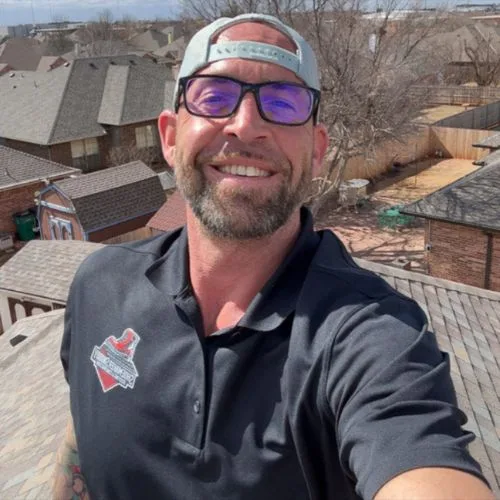
Eric Shoemaker — Owner, Shoemaker Snoddy Roofing & Construction
Eric co-owns Shoemaker Snoddy Roofing & Construction, a licensed general contractor based in Oklahoma City. He came up through roofing and construction management and works storm claims across Oklahoma and Texas.
Licensed general contractor · Oklahoma CIB registration #80007305 · 10+ years in roofing and construction
Shoemaker Snoddy Roofing & Construction
500 N Meridian Ave #202, Oklahoma City, OK 73107