
By Eric Shoemaker, Owner, Shoemaker Snoddy Roofing & Construction
TL;DR: A straightforward Oklahoma roof insurance claim usually runs four to eight weeks from the storm to a finished roof, with a second payment arriving weeks after that. The stages are inspection, filing, the adjuster meeting, approval and the first check, the build, then the depreciation release. Supplements and material delays are what stretch the timeline, not the paperwork.
The roof insurance claim process in Oklahoma isn’t complicated, but it is unfamiliar, and the gaps between stages are where homeowners assume something has gone wrong. Most of the time nothing has — the file is simply sitting with someone else. Here’s the whole sequence, what each stage actually involves, and where the delays genuinely come from.
The Short Version of the Timeline
For a typical hail or wind claim on a single-family home in the metro, here’s the shape of it:
| Stage | Typical timing |
|---|---|
| Storm to contractor inspection | 1–7 days |
| Filing the claim | Same week as inspection |
| Insurer assigns and schedules an adjuster | 3–14 days after filing |
| Adjuster inspection to written decision | 1–2 weeks |
| First (ACV) payment issued | 1–2 weeks after approval |
| Scheduling and completing the build | 1–3 weeks, weather permitting |
| Depreciation release after final invoice | 2–6 weeks after completion |
That’s roughly four to eight weeks to a finished roof in a clean claim. After a major metro-wide hail event, every one of those windows stretches — there are only so many adjusters, and they’re all working the same storm.
Stage 1: Inspection and Documentation
Before you call your insurer, get the roof looked at. You want to know whether there’s genuine storm damage and roughly what the scope is, because a claim filed on a roof with no real damage still goes on your record.
A proper inspection means photographs of hail strikes on shingles and soft metals, wind damage at the ridges and edges, and collateral evidence on gutters, screens, and vents. That documentation package is what the whole claim rests on later.
Ours costs nothing, and we’ll tell you honestly if there isn’t a claim worth filing.
Stage 2: Filing, and What to Say
You file — not the contractor. Anyone who offers to file on your behalf is stepping toward territory that Oklahoma reserves for licensed public adjusters, and roofing contractors are not that.
You’ll need the date of loss, a description of what happened, and your policy number. Ask two things while you have them on the phone: what your deductible is on this claim, and whether the policy pays actual cash value or replacement cost. That second answer shapes everything downstream, and it’s worth understanding ACV vs RCV coverage before the adjuster arrives.
Stage 3: The Adjuster Meeting
The insurer assigns an adjuster who schedules an inspection. This is the most important hour of the claim.
We meet the adjuster on site for every claim we’re involved in. Not to argue — to walk the roof together, point out the damage we documented, and make sure the scope on their worksheet matches what’s actually up there. Adjusters are working volume, especially after a metro-wide storm, and things get missed. A ridge cap line, a damaged pipe boot, detached gutters, the second slope nobody climbed.
The adjuster writes a scope and an estimate. That document, not a conversation, is what the insurer pays against.
Stage 4: Approval, First Payment, and the Gap
If the claim is approved you’ll receive a first payment. On a replacement cost policy that’s the actual cash value — the cost to replace, minus depreciation, minus your deductible. It will look smaller than the total estimate, and that’s expected rather than a shortfall.
The remainder, the recoverable depreciation, is held back until the work is actually done and invoiced. This is the stage that surprises people most, so it’s worth repeating: you’re meant to get two payments, and the second one is larger than homeowners expect.
If your mortgage company is named on the check — common on larger claims — it goes to them first for endorsement, which adds time. Call your servicer early and ask what their process is. That single call saves more delay than anything else in this list.
Stage 5: The Build, and Supplements
Once we have the approved scope and payment, we schedule. Weather is the main variable; we don’t tear off a roof into a forecast we don’t like.
Supplements happen on a meaningful share of jobs. A supplement is a request for additional payment when the actual conditions differ from the adjuster’s written scope — rotted decking discovered at tear-off, code-required items the original estimate omitted, an additional layer nobody knew was there. It’s a normal part of the process, not a dispute, but it does add days while the insurer reviews it.
Stage 6: Final Invoice and Depreciation Release
When the job is complete we send a final invoice and the documentation the insurer needs. They release the withheld depreciation, typically within a few weeks.
At that point you’ve paid your deductible and the insurer has paid the rest. If the numbers don’t reconcile, that’s the moment to sort it out — not months later.
What Slows an Oklahoma Claim Down
Four things account for most delays, and only one is really about the insurer:
Storm volume. After a large metro hail event, adjuster scheduling goes from days to weeks. Filing quickly puts you earlier in that queue.
Mortgage company endorsement. Frequently the single longest hold in the entire process.
Supplements. Necessary, but each round is another review cycle.
Homeowner delay. Waiting to file, waiting to choose a contractor, waiting on a decision. Oklahoma policies carry filing deadlines, and the practical evidence gets weaker as more weather passes over the damage.
Our claim assistance exists mostly to keep those first three moving. We can’t decide your claim, and we won’t pretend to — that’s your insurer’s call. What we can do is make sure the documentation is complete and the scope is accurate the first time.
Frequently Asked Questions About the Oklahoma Roof Claim Process
How long do I have to file a roof claim in Oklahoma?
Filing deadlines are set by your policy language rather than a single statewide number, and they vary by carrier. The practical answer is to file as soon as you know you have damage. Beyond the contractual deadline, later filings are harder to prove, because subsequent storms make it difficult to tie the damage to a specific date of loss.
Why is my first insurance check so much smaller than the estimate?
On a replacement cost policy, the first payment is the actual cash value — the replacement cost minus depreciation and minus your deductible. The withheld depreciation is released after the work is completed and invoiced. So a first check that looks short is usually the system working as intended, not an underpayment.
Do I need to be home when the insurance adjuster inspects my roof?
You don’t have to be, but it helps to have your contractor there. We meet the adjuster on site so the damage we documented gets walked and included in their written scope. What ends up on that worksheet determines what the insurer pays, so having someone present who knows the roof is worth more than being there yourself.
What is a supplement on a roof claim?
A supplement is a request for additional payment when the real conditions differ from the adjuster’s original written scope — damaged decking found at tear-off, code-required items that were omitted, or an extra layer of shingles nobody could see. It’s routine rather than adversarial. Each supplement does add review time to the claim.
Can Shoemaker Snoddy file my insurance claim for me?
No, and no roofing contractor in Oklahoma should offer to. Filing and negotiating a claim on your behalf is the work of a licensed public adjuster, which we are not. What we do is inspect, document the damage thoroughly, meet your adjuster on the roof, and provide a complete repair scope so the claim reflects the actual condition of your home.
Contact Shoemaker Snoddy for Roof Claim Help in Oklahoma City
If a storm has hit your home and you’re not sure where to start, the inspection is the right first step and it costs you nothing. Shoemaker Snoddy Roofing & Construction is a licensed general contractor in Oklahoma City, and as a general contractor we can carry the full storm scope — roof, gutters, and the interior repairs behind them — on one contract. Call us at (405) 724-9720 or reach us through our contact form.
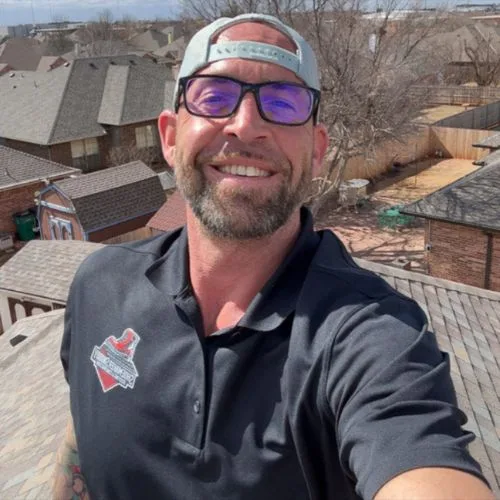
About the Author
Eric Shoemaker — Owner, Shoemaker Snoddy Roofing & Construction
Eric co-owns Shoemaker Snoddy Roofing & Construction, a licensed general contractor based in Oklahoma City. He came up through roofing and construction management and works storm claims across Oklahoma and Texas.
Licensed general contractor · Oklahoma CIB registration #80007305 · 10+ years in roofing and construction
Shoemaker Snoddy Roofing & Construction
500 N Meridian Ave #202, Oklahoma City, OK 73107