By Eric Shoemaker, Owner, Shoemaker Snoddy Roofing & Construction
TL;DR: Class 3 and Class 4 are impact ratings under UL 2218, tested by dropping steel balls on shingles — Class 4 survives the largest. Oklahoma law requires insurers to offer a discount for qualifying impact-resistant roofing, which is unusual and makes the upgrade math better here than in most states. Class 3 is a common standard install; Class 4 is an upgrade you should price rather than assume.
Class 3 vs Class 4 shingles is the one upgrade decision in Oklahoma roofing where the insurance side genuinely changes the answer. In most states you’d weigh durability against cost. Here there’s a statutory discount requirement in the mix, and it’s worth understanding before you take a default.
Class 3 vs Class 4 at a Glance
| Class 3 | Class 4 | |
|---|---|---|
| UL 2218 test | Withstands a 1.75” steel ball | Withstands a 2” steel ball — the highest rating |
| Relative hail resistance | Good | Best available in asphalt |
| Typical cost vs standard | Modest premium | Higher premium |
| Oklahoma insurance discount | May qualify with some carriers | Most likely to qualify |
| Common role | Frequent standard install | Deliberate upgrade |
| Warranty | Standard for the line | Often longer |
| Best for | Most homes, balanced cost | High hail exposure, long-term ownership, discount-driven math |
What the Ratings Actually Measure
UL 2218 is an impact test. Steel balls of increasing diameter are dropped onto shingle samples from a set height, and the sample is examined for cracking on the back of the mat. Class 1 through 4 correspond to increasing ball sizes, with Class 4 — the 2-inch ball — as the top rating.
Two things worth knowing about that.
It’s a laboratory impact test, not a hail simulation. Real hail arrives at angles, at varying speeds, sometimes with wind behind it, onto roofs of varying age and temperature. A Class 4 shingle is meaningfully tougher than a Class 3; it is not hail-proof, and anyone telling you otherwise is overselling.
It also tests the mat’s resistance to cracking, not granule retention. A Class 4 roof can still lose granules and still sustain claimable damage in a severe storm.
The Oklahoma Discount, and Why It’s Different Here
This is the part that changes the calculation. Oklahoma requires insurers writing residential property coverage to make available a discount for homes with qualifying impact-resistant roofing. Texas has no equivalent mandate — carriers there may offer discounts, but they aren’t required to.
What that means practically:
A discount should be available to you. If your carrier hasn’t mentioned it, ask directly.
The size varies a lot by carrier. Discounts in the range of roughly 5% to 30% of the applicable premium portion are commonly reported, depending on the insurer and the specifics of the policy. We won’t quote you a number for a particular company — carriers set their own, and they change them.
You have to document it. Insurers generally want proof of the product installed. Keep the manufacturer certification and the invoice showing the specific shingle line, and send it to your agent after the job. A qualifying roof nobody told the insurer about earns nothing.
Run the payback yourself. Take the upgrade cost, take your actual quoted discount in dollars per year, and divide. If the upgrade costs $1,800 more and saves $200 a year, that’s a nine-year payback, before you count the durability benefit or the effect on future claims. Whether that’s good depends on how long you’re staying.
There is also periodically a state grant program aimed at strengthening Oklahoma homes against severe weather. Terms and funding change, so check the current status at oid.ok.gov rather than relying on what was true last year.
How We’d Actually Advise It
Class 3 is a sound, common install and the right answer for a lot of homes. We don’t treat Class 4 as automatic, and we’d be suspicious of a contractor who does.
Class 4 makes the most sense when you’re staying in the house long-term, when your carrier’s quoted discount is at the healthier end, or when you’re in a part of the metro that keeps getting hit. It makes least sense when you’re planning to sell within a few years — you’d pay the upgrade and someone else collects the discount.
The honest version: get the discount quoted in real dollars from your own carrier before you decide, not after. That single call is worth more than any general guidance, including this article.
Whatever you choose, it should show up as a line item on the estimate. If you’re pricing a full replacement, our breakdown of what a new roof costs covers where this sits relative to the rest of the job, and our residential roofing estimates itemise it.
Frequently Asked Questions About Class 3 and Class 4 Shingles
Does Oklahoma require an insurance discount for impact-resistant shingles?
Oklahoma requires insurers writing residential property policies to make a discount available for qualifying impact-resistant roofing. That’s a genuine difference from most states, including Texas. The requirement is that a discount be offered — the amount is set by each carrier, so ask yours what it is for your policy specifically.
How much is the Class 4 shingle discount worth in Oklahoma?
It varies substantially by carrier, with reported discounts commonly falling somewhere in the 5% to 30% range of the applicable premium portion. We’d avoid trusting any specific figure quoted online, including for named insurers, since carriers change these. Get the number from your own agent in dollars per year and calculate the payback against the upgrade cost.
Are Class 4 shingles hail-proof?
No. Class 4 is the highest UL 2218 impact rating, meaning the shingle withstood a 2-inch steel ball without the mat cracking in a lab test. Real hail is more varied and more severe than that test, and Class 4 roofs still sustain damage and still generate legitimate claims. It’s substantially tougher, not immune.
Is Class 3 good enough for an Oklahoma roof?
For many homes, yes. Class 3 is a common standard install and performs well. The case for upgrading to Class 4 is strongest when you’re staying long-term, when your carrier offers a meaningful discount, or when your area has repeated hail. It’s a buyer decision worth pricing rather than a default either way.
How do I claim my impact-resistant roof discount?
Send your insurer documentation of the specific product installed — the manufacturer certification and an invoice identifying the shingle line. Insurers generally won’t apply a discount they don’t know about, so this is a step homeowners frequently miss. Ask your agent what form they want it in, and confirm the discount appears on your next renewal.
Get an Itemized Roofing Estimate in Oklahoma City
If you’re weighing Class 3 against Class 4, we’ll quote both so you can see the actual difference against your carrier’s actual discount. Shoemaker Snoddy Roofing & Construction is a licensed general contractor in Oklahoma City, and our estimates itemize the upgrade rather than burying it. Call us at (405) 724-9720 or reach us through our contact form.
About the Author
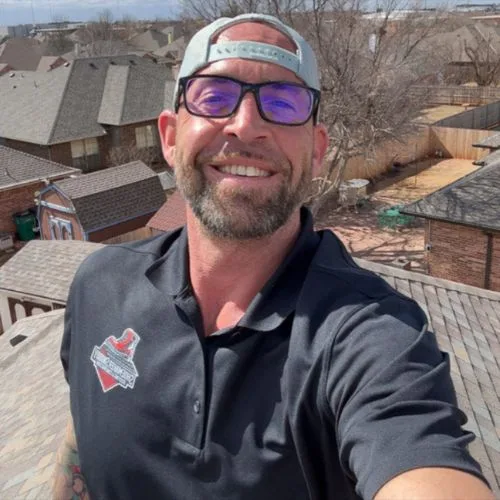
Eric Shoemaker — Owner, Shoemaker Snoddy Roofing & Construction
Eric co-owns Shoemaker Snoddy Roofing & Construction, a licensed general contractor based in Oklahoma City. He came up through roofing and construction management and works storm claims across Oklahoma and Texas.
Licensed general contractor · Oklahoma CIB registration #80007305 · 10+ years in roofing and construction
Shoemaker Snoddy Roofing & Construction
500 N Meridian Ave #202, Oklahoma City, OK 73107