
By Eric Shoemaker, Owner, Shoemaker Snoddy Roofing & Construction
TL;DR: Replacing a single missing shingle takes a pry bar, a matching shingle, roofing nails and roofing cement — about twenty minutes on a safe, dry, low-slope roof. Work on a mild day when the shingles are pliable but not hot enough to scuff. If more than a few are gone, if the roof is steep or wet, or if you’re not confident on a ladder, this is not a job worth risking a fall over.
A shingle blows off in an Oklahoma windstorm and the gap looks minor. It isn’t, particularly. That exposed spot is a path to the decking, and water travels sideways once it gets under the course above. Here’s how the repair is actually done, and an honest account of when to stop and call someone.
Before You Start
Check the weather and the surface. Dry roof, mild temperature. Cold shingles crack when you flex them; hot ones scuff and tear under a knee. Morning on a mild day is the window.
Get a matching shingle. Leftovers from the original install are ideal. Otherwise take a piece of the damaged one to a supplier and match as closely as you can — exact colour matching on a weathered roof is rarely possible, and a slightly-off shingle is far better than an open one.
Be honest about the ladder. Most roofing injuries are falls, and most falls happen on the way up or down. A single-story house with firm level ground is a reasonable DIY setting. A two-story, a steep pitch, wet decking, or soft ground is not.
What you’ll need
- Flat pry bar
- Hammer and roofing nails (galvanized, 1¼”)
- Replacement shingle
- Roofing cement and a caulk gun or putty knife
- Utility knife
- Sturdy ladder, and shoes with grip
Step-by-Step: Replacing a Missing Shingle
Step 1: Clear the area and pull any leftover nails
If the shingle tore away, nails often stay behind. Slide the pry bar under the shingle above the gap, lift gently to break the sealant strip, and back out any remaining nails. Clear grit and debris so the new shingle lies flat.
Work gently on the course above — it’s sealed down, and forcing it cracks it.
Step 2: Slide the new shingle into position
Trim the replacement to match if needed, then slide it up under the course above until its bottom edge lines up with the shingles on either side. Alignment matters visually and functionally; a shingle sitting proud of the line catches wind.
Step 3: Nail it in
Four nails, placed in the nailing strip — the reinforced band across the shingle, usually just below the tab cutouts. Nails go through the strip and into the deck, driven flush. Not angled, not overdriven, not so shallow the head stands up.
Nail placement is the single most common failure in DIY shingle work. Too high and the nail misses the shingle beneath; too low and the head is exposed to weather.
Step 4: Seal it
Run a small amount of roofing cement under the shingle’s bottom edge and press it down, and dab the exposed nail heads on the course above where you lifted it. Sparingly — excess cement traps water and looks worse than the missing shingle did.
Step 5: Check the surrounding area
You’re up there already. Look at the neighbouring shingles for lifted edges or creasing, check the ridge line, and look at the pipe boots. Wind that took one shingle usually broke the seal on others nearby, and those are the ones that leave next time.
Common Mistakes
Nailing in the wrong place. Covered above, and worth repeating — it’s the mistake that causes repeat failures.
Using too much roofing cement. Cement is a sealant, not an adhesive substitute. A shingle held on with a mound of tar will fail.
Working a brittle roof. On a roof past 15 years, adjacent shingles crack when you lift them, and a one-shingle repair turns into four. This is the point where the roof is telling you something.
Ignoring why it came off. A shingle that blew off in ordinary wind suggests the original fastening was wrong, or the seal had already failed. One missing shingle in a field of properly sealed ones is an event. Several is a pattern.
When to Call a Professional Instead
Genuinely, not as a sales line:
- More than two or three shingles missing, or damage across multiple slopes
- Any roof steeper than a comfortable walking pitch
- A roof over 15 years old, where the surrounding shingles are too brittle to lift
- Any sign water has already reached the decking — soft spots, staining in the attic
- Storm damage you may want to claim, where a DIY repair can complicate documentation
That last one matters in Oklahoma. If a hailstorm or windstorm caused the damage, photograph everything before repairing it. Patching first and filing later makes the claim harder to substantiate.
And there’s a threshold worth knowing: once repairs reach roughly a quarter of a roof section within a year, the expectation shifts toward replacing that section to current code. We wrote about when a repair becomes a replacement separately — it’s the reason repeated patching sometimes costs more than replacing.
Our residential roofing inspections cost nothing, including the ones where we tell you it’s a twenty-minute fix you can do yourself.
Frequently Asked Questions About Replacing a Missing Shingle
Can I replace one roof shingle myself?
On a dry, low-slope, single-story roof with a matching shingle, yes — it’s a straightforward repair with basic tools. The risk is the ladder rather than the roofing. If the roof is steep, wet, high, or more than 15 years old with brittle shingles, the cost of a professional repair is small compared with a fall.
How urgent is one missing shingle?
More urgent than it looks. The exposed area lets water reach the underlayment and decking, and water travels sideways once it’s under the course above — a leak can appear well away from the gap. It won’t fail overnight, but it shouldn’t wait for the next season either.
What if I can’t match my shingle color?
Match as closely as you can and accept the difference. Weathered shingles change color, so even the identical product from the same manufacturer won’t match a roof that’s been up for years. A visible repair is far better than an open roof, and if the mismatch bothers you, that’s a reason to consider replacement rather than to leave the gap.
Should I file an insurance claim for a few missing shingles?
Usually not on its own, since the repair cost is likely below your deductible. What matters is whether the wind or hail event caused broader damage you can’t see from the ground. Get an inspection first — if the storm damaged multiple slopes, that’s a different conversation than a single shingle.
Does a DIY shingle repair void my roof warranty?
It can. Manufacturer material warranties and contractor workmanship warranties often include conditions about who performs repairs. If your roof is still under either, check before you start — a twenty-minute repair isn’t worth compromising coverage that has years left on it.
Ready to Get Started? Contact Shoemaker Snoddy
If the damage is more than a shingle or two, or you’d rather not be on the roof at all, we’ll come look at no cost. Shoemaker Snoddy Roofing & Construction is a licensed general contractor based in Oklahoma City, and we’ll photo-document what we find so you have a record whether or not you file a claim. Call us at (405) 724-9720 or reach us through our contact form.
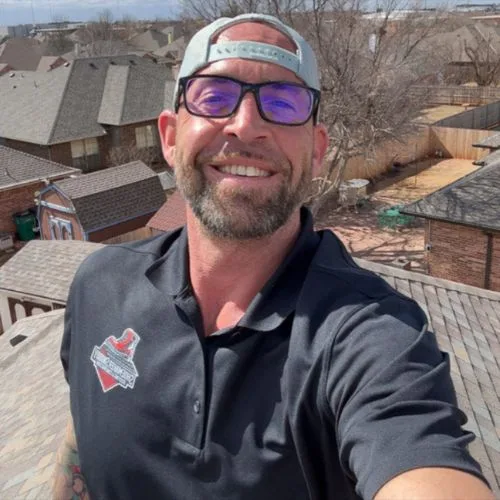
About the Author
Eric Shoemaker — Owner, Shoemaker Snoddy Roofing & Construction
Eric co-owns Shoemaker Snoddy Roofing & Construction, a licensed general contractor based in Oklahoma City. He came up through roofing and construction management and works storm claims across Oklahoma and Texas.
Licensed general contractor · Oklahoma CIB registration #80007305 · 10+ years in roofing and construction
Shoemaker Snoddy Roofing & Construction
500 N Meridian Ave #202, Oklahoma City, OK 73107