
By Eric Shoemaker, Owner, Shoemaker Snoddy Roofing & Construction
TL;DR: After storm damage opens your roof, you have a duty under your policy to prevent further damage — and tarping is how that’s done. Reasonable emergency mitigation is generally reimbursable as part of the claim, so photograph everything and keep receipts. Waiting to tarp until the claim is approved is the mistake that turns a roof claim into a roof-plus-ceiling-plus-flooring claim.
An emergency roof tarp is the least glamorous thing we do and one of the most consequential. The window between the storm and the repair is where a manageable claim quietly becomes an expensive one, and what happens in that window is largely up to you.
Why Speed Matters More Than the Repair
Water doesn’t wait for your adjuster. Once the roof envelope is open, every subsequent rain moves damage inward — decking, insulation, ceilings, drywall, flooring, and eventually the conditions for mold.
Two things follow from that.
The first is practical: interior damage is more expensive and more disruptive to repair than the roof itself. A tarp is cheap insurance against that escalation.
The second is contractual, and homeowners often don’t know about it. Property policies generally include a duty to protect the property from further damage after a loss. Failing to take reasonable steps can affect what the insurer covers — the argument being that the additional damage was preventable rather than storm-caused.
So tarping isn’t just a good idea while you wait. It’s part of holding up your end.
What Tarping Actually Involves
A proper emergency tarp is not a blue plastic sheet held down with bricks.
It means heavy-duty material sized to cover the opening with real overlap, anchored so wind can’t get underneath, and run over the ridge where the damage is near the top so water can’t track under the upslope edge. Fasteners get placed to hold in Oklahoma wind without creating a new set of holes in sound roofing.
Done well, a tarp holds for weeks and buys the time the claim process needs. Done badly, it comes off in the next storm — or channels water somewhere worse than where it was going.
We do this as part of restoration services, and we answer the phone around the clock for it, because storm damage doesn’t schedule itself during business hours.
Documenting It So the Claim Reflects It
This is the part worth being disciplined about, and it takes ten minutes.
Photograph before you cover anything. Once the tarp is on, the damage underneath is invisible. Wide shots showing the house and the damaged area, then close shots of the actual openings. Get interior photos too — stained ceilings, wet insulation, water on the floor.
Photograph the tarp once it’s on. This is your evidence you met the duty to mitigate.
Keep every receipt. Materials, labor, the tarp itself. Reasonable emergency mitigation costs are commonly reimbursable as part of the claim.
Note the date and time. Tie the damage to the storm event. This matters more than people expect, especially when another system rolls through before the adjuster arrives.
Don’t throw anything away. Damaged material can be evidence. Let the adjuster see it, or photograph it thoroughly before disposal.
That documentation feeds directly into the claim timeline — the tarping photos frequently end up being the clearest record of what the roof looked like before anyone touched it.
What Not to Do
Don’t get on the roof yourself after a storm. Wet, hail-covered, possibly structurally compromised, often in the dark. This is genuinely the most dangerous moment in the life of a roof, and there’s no repair worth it.
Don’t wait for claim approval to mitigate. Approval takes days to weeks. Damage doesn’t pause for it, and the duty to mitigate applies immediately.
Don’t let a full repair start before the adjuster has seen it, unless it’s genuinely emergency work. Temporary protection is expected; a completed replacement before inspection makes the claim much harder to substantiate.
Don’t sign a contract to get a tarp. Emergency tarping shouldn’t require committing to the full replacement. If someone makes that a condition, that’s a sales tactic wearing a hard hat.
Frequently Asked Questions About Emergency Roof Tarping
Does homeowners insurance cover emergency roof tarping?
Reasonable emergency mitigation is generally reimbursable as part of the claim, because policies typically obligate you to prevent further damage after a loss. Keep receipts and photographs so the cost can be substantiated. Whether any specific expense is covered is your insurer’s determination, so document thoroughly rather than assuming.
Should I tarp my roof before the adjuster sees the damage?
Yes. Photograph the damage thoroughly first, then cover it. Adjusters expect to see temporary protection in place and understand that damage may be underneath. Leaving a roof open for days so the adjuster can see it “as-is” risks interior damage the insurer may view as preventable.
How long can a roof tarp stay on?
A properly installed tarp will typically hold for several weeks, which usually covers the gap between the storm and the repair. It’s temporary protection, not a roof — extended exposure, UV, and repeated Oklahoma wind will degrade it. If the claim is dragging, the tarp should be inspected rather than assumed to be holding.
Can I tarp my own roof after a storm?
We’d strongly discourage it. A storm-damaged roof is wet, possibly weakened, often covered in hail, and frequently accessed in poor conditions. Most serious roofing injuries happen in exactly this situation. If the damage is minor and interior water is limited, containing it from inside while you wait for a crew is the safer choice.
Do you charge for emergency tarping in Oklahoma City?
Emergency tarping is billable work with materials and labor behind it, and it’s typically submitted as part of the claim. We’ll be upfront about the cost before we do it, and we don’t require you to sign a replacement contract to get your house covered. Our answering service runs 24 hours a day for storm calls.
Call for Emergency Roof Tarping in the OKC Metro
If a storm has opened your roof, the priority is getting it covered before the next rain. Shoemaker Snoddy Roofing & Construction is a licensed general contractor in Oklahoma City with a 24-hour answering service, and because we handle roofing, gutters and interior restoration, we can carry the whole scope if water has already gotten in. Call us at (405) 724-9720.
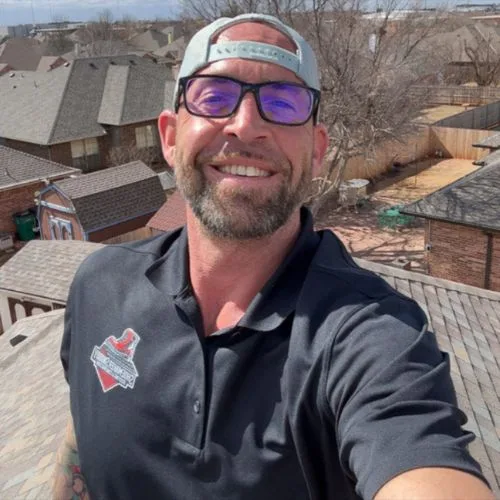
About the Author
Eric Shoemaker — Owner, Shoemaker Snoddy Roofing & Construction
Eric co-owns Shoemaker Snoddy Roofing & Construction, a licensed general contractor based in Oklahoma City. He came up through roofing and construction management and works storm claims across Oklahoma and Texas.
Licensed general contractor · Oklahoma CIB registration #80007305 · 10+ years in roofing and construction
Shoemaker Snoddy Roofing & Construction
500 N Meridian Ave #202, Oklahoma City, OK 73107