
By Eric Shoemaker, Owner, Shoemaker Snoddy Roofing & Construction
TL;DR: Texas does not license roofing contractors at the state level. Anyone can legally call themselves a roofer in Texas tomorrow with no exam, no bond and no state registration. That puts the entire burden of vetting on you — so check insurance certificates directly with the carrier, verify the business is real and established, and treat voluntary credentials as a signal rather than a guarantee.
Homeowners moving to Texas, or hiring there for the first time, usually assume roofing works like the trades they know. It doesn’t. Texas licenses a long list of occupations through its regulatory agency — electricians, plumbers, HVAC technicians, cosmetologists, tow truck operators — and roofing is not among them. Here’s what to check instead.
What “No License” Actually Means in Texas
There is no state roofing license to hold, so there’s also no state exam, no minimum experience requirement, no state-mandated bond, and no state disciplinary board specific to roofers.
That’s genuinely different from Oklahoma, where roofing contractors are required to register with the state and you can ask for and verify that registration number.
A few things are still true in Texas. Cities and counties may impose their own registration or permitting requirements, and those vary considerably — Dallas and Fort Worth are not identical. General consumer protection law still applies, and fraud is still fraud. And a contractor still needs insurance to work responsibly, even though no state agency is checking.
What’s missing is the front door. In a licensed state, the license filters out some portion of the unqualified before they ever reach your driveway. In Texas that filter doesn’t exist, and after a hailstorm the volume of new “roofing companies” reflects it.
The Six Checks That Replace a License
1. Get the insurance certificate — and call the carrier
General liability and workers’ compensation. Ask for the certificate of insurance, then contact the issuing agent directly to confirm it’s current.
This is the most important check on the list and the one most often skipped. Certificates are easy to fake and easy to let lapse. A five-minute phone call to the agent verifies what a PDF cannot.
Workers’ comp matters more than homeowners realise: if an uninsured worker is injured on your roof, you may find yourself part of that conversation.
2. Confirm the business is real and established
Texas Secretary of State registration, a physical address you can look at on a map, a phone number that isn’t only a cell, and a history that predates the last storm.
Check how long the entity has existed. A company formed six weeks after a hailstorm is a specific kind of business.
3. Check local permitting requirements
Since the state doesn’t regulate roofing, your city might. Call the local building department, ask whether a permit is required for a re-roof at your address, and ask whether the contractor needs to be registered with the city. Then confirm your contractor is.
4. Treat voluntary credentials as signal, not proof
There are voluntary trade associations in Texas — RCAT being the best known — and manufacturer certification programs that require training and a track record. Neither is a license, and neither is legally required.
They’re still worth something. A contractor who sought out voluntary accreditation in a state that demands none of it has told you something about how they operate. Just verify the credential with the issuing body rather than accepting a logo on a truck.
5. Read the warranty carefully
Two separate things: the manufacturer’s material warranty and the contractor’s workmanship warranty. In an unlicensed state, the workmanship warranty is only as durable as the company offering it — and companies with no permanent presence are common after storms.
Get the length and the exclusions in writing.
6. Insist on a detailed written scope
Tear-off versus overlay, underlayment, flashing, ventilation, decking rate, cleanup. Same standard we’d apply anywhere, and it matters more where nothing else is filtering.
Texas vs. Oklahoma, Practically
We work in both states, and the difference shapes how we advise people.
In Oklahoma, “are you registered with the state?” is a real question with a verifiable answer, and it does useful screening work. In Texas that question has no meaning, and asking it will get you a confident yes from people who understand you don’t know that.
So in Texas, insurance verification carries the weight the license would have. Call the carrier. Everything else on this list is secondary to that one call.
If you’re pricing work in the metroplex, our breakdown of what a DFW roof costs covers the money side, and our residential roofing in Texas page covers what we do there.
Frequently Asked Questions About Texas Roofing Licenses
Does Texas require a license to be a roofer?
No. Texas does not license roofing contractors at the state level — there’s no state exam, bond requirement or registration for roofers specifically. Some cities and counties impose their own registration or permitting rules, so check locally. But at the state level, anyone can operate as a roofer in Texas.
How do I verify a Texas roofing contractor is legitimate?
Start with insurance: get the general liability and workers’ compensation certificates and call the issuing agent to confirm they’re active. Then verify the business entity with the Texas Secretary of State, look at the physical address, check local permit requirements, and get a detailed written scope. The insurance call is the single most valuable step.
What is RCAT and is it required in Texas?
RCAT is the Roofing Contractors Association of Texas, a voluntary trade association. Membership and its accreditation programs are not required by law and are not a license. They do indicate a contractor who pursued standards the state doesn’t impose, which is a reasonable positive signal — just verify any claimed credential with the organization directly.
Is it riskier to hire a roofer in Texas than in Oklahoma?
The vetting burden is higher in Texas because there’s no state registration acting as a first filter, and Oklahoma has one you can verify. That doesn’t mean Texas roofers are worse — many excellent contractors work there. It means the checks that a license would perform for you have to be performed by you.
Do I still need a permit for a roof in Texas?
Often yes, depending on the city or county. Permitting is handled locally rather than by the state, and requirements differ between jurisdictions in the same metro area. Call your local building department, confirm whether a permit is needed for your address, and make sure your contractor pulls it rather than asking you to.
Talk to a Roofing Contractor Serving Dallas–Fort Worth
If you’re hiring for a roof in the metroplex and want a contractor who’ll hand over insurance certificates without being chased, that’s a reasonable starting standard. Shoemaker Snoddy Roofing & Construction is a licensed general contractor headquartered in Oklahoma City and working across Texas, carrying the same documentation and the same workmanship guarantee in both states. Call us at (405) 724-9720 or reach us through our contact form.
About the Author
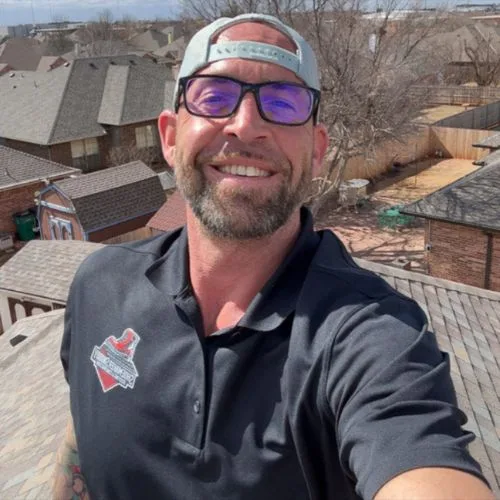
Eric Shoemaker — Owner, Shoemaker Snoddy Roofing & Construction
Eric co-owns Shoemaker Snoddy Roofing & Construction, a licensed general contractor based in Oklahoma City. He came up through roofing and construction management and works storm claims across Oklahoma and Texas.
Licensed general contractor · Oklahoma CIB registration #80007305 · 10+ years in roofing and construction
Shoemaker Snoddy Roofing & Construction
500 N Meridian Ave #202, Oklahoma City, OK 73107