By Eric Shoemaker, Owner, Shoemaker Snoddy Roofing & Construction
TL;DR: You usually don’t need a lightning rod with a metal roof, but the roof isn’t the reason either way. Metal doesn’t attract lightning — height, isolation and terrain decide what gets struck, and a metal roof actually handles a strike better than asphalt because it won’t ignite. Lightning rods make sense when your building is tall, exposed, or stands alone, regardless of what’s on top of it.
The question behind “do I need a lightning rod with a metal roof” is usually a different question wearing a disguise: does putting metal on my house make it more likely to get hit? It doesn’t. That myth has outlived every bit of evidence against it, and it costs homeowners real money — either in lightning protection nobody needed, or in talking themselves out of a metal roof that would have served them better. Here’s what actually determines your risk, and when lightning rods on metal roofs are genuinely worth installing.
Do Metal Roofs Attract Lightning?
No. Metal roofs do not attract lightning, and there’s no meaningful difference in strike probability between a metal roof and an asphalt one.
Lightning is looking for the shortest path to ground from a charged cloud. What shapes that path is height, isolation, and terrain — how tall the structure is, whether anything nearby is taller, and how exposed it sits. A single-story metal-roofed house surrounded by mature trees is a poorer target than the three-story shingled house on the hill next door. The roofing material barely enters into it.
What metal does change is what happens after a strike. Metal is highly conductive and non-combustible, which means it spreads the energy across a wide surface instead of concentrating heat in one spot. That’s the opposite of attracting lightning — it’s handling it well.
So if you’re weighing metal for your next roof and lightning is the thing giving you pause, it shouldn’t be. The real considerations are cost, lifespan, and how the panels are detailed and fastened.
What Happens When Lightning Strikes a Metal Roof?
The energy disperses across the panels and travels to ground, and because steel and aluminum don’t burn, the roof itself usually comes through intact. You may get cosmetic scorching at the attachment point. That’s typically the extent of it.
The risk in a strike was never really the roof — it’s everything the current can reach on its way to ground. Without a deliberate path, lightning improvises, and it will use whatever’s conductive: wiring, plumbing, gas lines, a satellite mount. That’s where the expensive damage happens, and it’s true whether your roof is metal, tile, or shingle.
This is the distinction most articles blur. A metal roof reduces your fire risk in a strike. It does nothing about your electrical risk. The system that addresses electrical risk is a lightning protection system, and it’s a separate purchase from your roof.
Metal Roof vs. Asphalt Shingles in a Lightning Strike
| Factor | Metal Roof | Asphalt Shingles |
|---|---|---|
| Attracts lightning | No | No |
| Fire risk from a strike | Very low — non-combustible | Real — asphalt and wood decking can ignite |
| Energy behavior | Disperses across panels | Concentrates heat at the strike point |
| Typical post-strike damage | Cosmetic scorching | Can range from localized burn-through to structural |
| Protects home wiring | No — needs a separate system | No — needs a separate system |
| Typical lifespan | 40–70 years | 15–30 years |
| Best for | Storm-prone regions, long-term ownership | Lower upfront cost, easier spot repair |
The row that matters most is the second-to-last one. Neither material protects what’s inside your walls. If that’s your concern, the roof is not the product you’re shopping for.
When You Actually Need Lightning Rods on a Metal Roof
Lightning rods — properly called air terminals — aren’t about the roof covering. They’re about the building’s profile and what’s inside it. Here’s when they earn their cost.
Height and elevation
Tall structures get struck more often, and so do buildings on high ground. A two-story home on a ridge is a materially better target than the same house in a valley. If your property sits above the surrounding terrain, that raises your risk regardless of roofing material.
Isolation
A structure standing alone in open country — a farmhouse, a shop building, a barn with no tree line nearby — is the tallest thing for a long way. That’s the classic profile for lightning protection, and it’s why you see rods on rural metal buildings far more often than on suburban homes.
What’s inside
Sometimes the contents justify the system even when the building profile doesn’t. Server equipment, a home with substantial electronics, livestock, or anything where an outage or fire would be genuinely costly. Lightning protection is fundamentally insurance against a rare event — the calculation changes when the loss would be severe.
If none of those describe your house, a suburban metal-roofed home in a neighborhood of similar-height houses is a low-priority candidate. Grounding, bonding, and quality surge protection at the panel will do more for you per dollar.
What a Lightning Protection System Actually Includes
A lightning rod on its own does nothing. A real system is five connected parts:
- Air terminals — the rods themselves, placed at high points and along ridges
- Conductors — heavy cable carrying current from the terminals down the structure
- Ground electrodes — rods driven deep enough to disperse energy into the soil
- Bonding — tying the building’s metal systems into one grounding path so current can’t arc between them
- Surge protection devices — installed at the electrical panel to protect what’s plugged in
Bonding matters more than usual on a metal roof, because the roof itself is a large conductive surface that has to be tied into the same grounding path as everything else. Done right, that’s an asset. Done piecemeal, you’ve created a conductor with nowhere to send its energy.
In the United States these systems are built to NFPA 780, and installation is genuinely specialized work — certified lightning protection contractors, not roofers. We install metal roofing; we don’t install lightning protection systems. If you decide you need one, hire a certified specialist and have them coordinate with whoever details your roof. We’d rather tell you that than sell you something outside our lane.
What This Means for Oklahoma Homeowners
Oklahoma sits in one of the more thunderstorm-active parts of the country, and homeowners here think about severe weather more than most. But the honest local read is this: hail and wind damage roofs here far more often than lightning does. In our residential roofing work across the metro, storm claims are overwhelmingly hail and wind — not strikes.
That shapes where the money should go. For most Oklahoma City homes, an impact-resistant roof and good surge protection are a better return than a full lightning protection system. Rural properties west and north of the metro are the real exception — open ground, isolated structures, metal shop buildings and barns standing alone. That’s the profile where lightning protection stops being theoretical.
One local note worth knowing: standing-seam metal is popular here partly because of hail, and its performance in a strike is a secondary benefit rather than the reason people choose it. If a contractor is selling you metal primarily on lightning safety, they’re selling the wrong feature.
Frequently Asked Questions About Metal Roofs and Lightning
Are metal roofs safe in lightning?
Yes. Metal roofs are generally safer in a lightning strike than asphalt shingles, because metal is non-combustible and disperses the energy across a wide surface instead of concentrating heat where the strike lands. The roof does not increase your chance of being struck. What it doesn’t do is protect your wiring and electronics — that requires a separate grounding and surge protection setup.
Do lightning rods on metal roofs require special installation?
Yes. The metal roof is a large conductive surface, so it must be bonded into the same grounding path as the rest of the system rather than left electrically isolated. Certified lightning protection contractors handle this detail routinely under NFPA 780. It’s the main reason this work shouldn’t be improvised by a general handyman or a roofing crew.
Does a metal roof lower or raise my insurance premium?
In Oklahoma, roofing discounts are usually tied to impact resistance rather than lightning performance. Some carriers offer credits for qualifying impact-rated roofing materials, and some may recognize a certified lightning protection system separately. Coverage and discount decisions rest entirely with your insurer, so ask your carrier directly what they credit before you assume a discount applies.
Do building codes require lightning protection for metal roofs?
Residential building codes generally do not require lightning protection systems on homes, including those with metal roofs. Codes do require proper grounding and bonding of the electrical system and connected metal components. Requirements vary by jurisdiction and by building type, so confirm specifics with your local building authority before you rely on a general answer.
Are lightning rods for metal buildings different from residential ones?
The engineering principles are the same, but metal buildings — shops, barns, agricultural structures — are more common candidates because they’re often isolated and tall relative to their surroundings. Their steel frames also need careful bonding so current follows the intended path to ground. A certified installer will assess the structure rather than apply a residential template.
Talk to an Oklahoma City Metal Roofing Contractor
If you’re weighing a metal roof and lightning is the thing holding you back, that’s the wrong reason to hesitate — and we’d rather walk you through the tradeoffs that actually matter for your house. Shoemaker Snoddy Roofing & Construction is a licensed general contractor based in Oklahoma City, working across Oklahoma and Texas. We’ll give you a straight answer on whether metal makes sense for your roof, and point you to a certified specialist if you decide lightning protection belongs in the plan. Call us at (405) 724-9720 or send us a message through our contact form.
About the Author
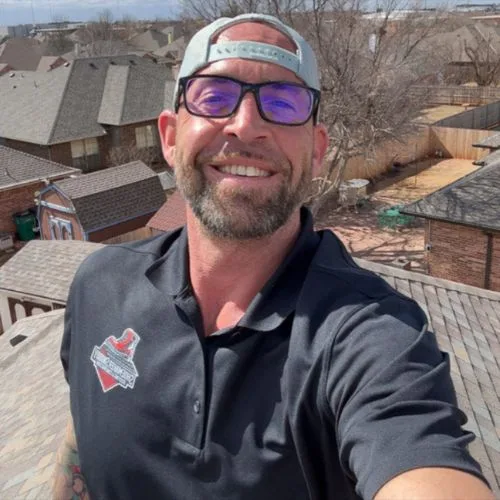
Eric Shoemaker — Owner, Shoemaker Snoddy Roofing & Construction
Eric co-owns Shoemaker Snoddy Roofing & Construction, a licensed general contractor based in Oklahoma City. He came up through roofing and construction management and works storm claims across Oklahoma and Texas.
Licensed general contractor · Oklahoma CIB registration #80007305 · 10+ years in roofing and construction
Shoemaker Snoddy Roofing & Construction
500 N Meridian Ave #202, Oklahoma City, OK 73107