The Code-Validated Roof: Building Codes for Roofing Services OKC Explained

For any major roofing project in Oklahoma City, the Building Codes for Roofing Services OKC are the non-negotiable legal foundation for the work. These codes are not merely bureaucratic hurdles; they are your Code-Validated Resilience Standard—a set of rules specifically designed to protect your home and its assets from Oklahoma's notorious weather.
At Shoemaker Snoddy, our unique perspective is focused on Risk Mitigation through Certified Compliance. We view every code requirement—from the shingle's wind rating to the attic's ventilation—as a critical engineering specification that secures your long-term investment. Failing to adhere to the adopted codes (primarily the 2018 International Residential Code, or IRC) exposes you to potential fines, voided manufacturer warranties, and delayed insurance claims.
This authoritative guide breaks down the essential residential roofing codes you must understand, ensuring your project is built to last and in compliance with legal requirements.
1. The Legal Gateway: Permits and Professional Licensing
The integrity of your project starts with the credentials of your contractor and the official permission to build.
A. The Mandatory Permit Requirement
In Oklahoma City, a permit is required for any significant roofing work on a single-family home or duplex.
Trigger: Generally, any roof removal, repair, or replacement project that exceeds 500 square feet requires a permit. Minor maintenance jobs below this threshold are typically exempt from this requirement.
Purpose: The permit is the city's official notification that work is commencing. It triggers the mandatory inspection process (tear-off and final), which ensures that the job adheres to the adopted IRC standards.
The Contractor's Role: Your contractor is legally responsible for applying for the permit, paying the associated fees ($94.50, as of the latest ordinance), and scheduling all necessary inspections. A homeowner must never allow significant work to proceed without a valid permit posted on site.
B. Contractor Certification (CIB Registration)
Homeowners must verify their contractor's registration to protect themselves from liability.
State Requirement: The Oklahoma Construction Industries Board (CIB) requires all residential roofing contractors to register. This registration confirms they meet minimum standards.
Insurance Mandate: CIB registration requires the contractor to carry a minimum of $500,000 in General Liability Insurance. This non-negotiable insurance protects the homeowner from liability in case of accidental property damage or worker injury. An unlicensed, uninsured crew is a massive financial risk.

2. Structural Resilience: Fastening and Deck Integrity Codes
The Building Codes for Roofing Services OKC are engineered to withstand the region's high winds and severe weather. This means stricter requirements for how the roof is attached.
A. The Sheathing/Decking Code (IRC R905.2.1)
Your new shingles must be installed on a solid, structurally sound foundation.
Deck Integrity: The code requires asphalt shingles to be fastened to solidly sheathed decks. During the tear-off inspection, the inspector confirms the decking (plywood or OSB) is free of rot, water damage, and wide gaps. Any rotten or compromised sections must be replaced before new materials are applied. Failure to replace damaged decking leads to shingle blow-off and structural compromise.
Fastener Penetration: Fasteners (roofing nails) must be corrosion-resistant and must penetrate the roofing deck by at least 3/4 inch.
B. Wind Uplift Resistance (ASTM D7158/D3161)
Given OKC's high-wind environment, shingles must meet specific standards.
Shingle Rating: Shingles must comply with established wind resistance standards like ASTM D7158 or ASTM D3161. These standards dictate the wind speeds the shingle is certified to resist.
Enhanced Fastening: In high-wind zones like Oklahoma, reputable contractors adhere to best practices that often exceed the basic four nails per shingle. Using six nails per shingle is a common enhancement that provides superior wind resistance and helps preserve manufacturer warranties.
C. Ice and Water Shield (Valleys and Low Slopes)
The code mandates specialised underlayment protection in vulnerable areas.
Vulnerable Areas: The IRC requires a 36-inch-wide ice barrier (ice and water shield) to be installed in all valleys of the roof, and along the eaves/edges, especially in areas prone to ice damming or severe wind-driven rain. This highly adhesive membrane is a crucial second line of defence against leaks.
3. The Code Checkpoints: Passing Inspection
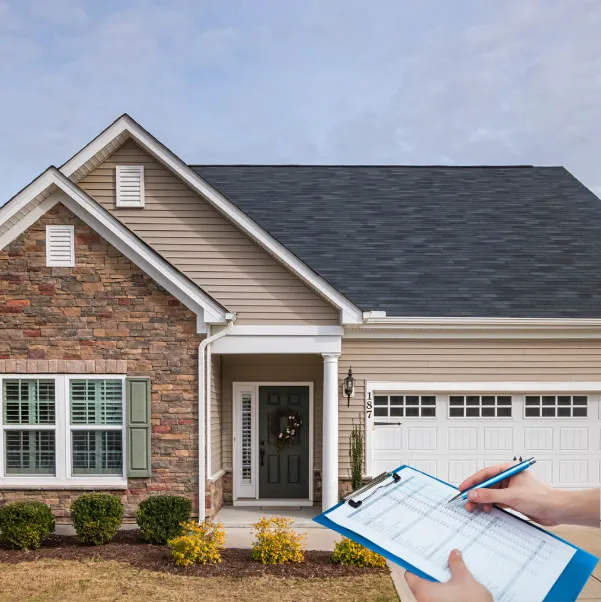
Code compliance is verified during two non-negotiable inspections that the contractor must schedule and pass.
A. The Tear-Off Inspection
This is the most critical structural check.
When: Occurs after the old roofing material is entirely removed, but before the new underlayment is installed.
What is Checked: Deck integrity (damage, gaps), proper flashing removal, and preparation for new underlayment. Any mandatory deck replacement or structural repair must be visible for the inspector at this time.
B. The Final Inspection
This verifies the proper application of all visible components.
When: Occurs after all roofing materials, flashing, and vents are completely installed.
What is Checked: Shingle lay, alignment, and fastening patterns. Proper installation of pipe boots and flashing around penetrations. Verification that the attic ventilation system meets the required 1 sq ft of ventilation per 300 sq ft of attic floor space (or 1 per 150 sq ft if the vapour barrier is not present).
4. Ventilation and Moisture Codes (IRC R806)
Ventilation codes are often overlooked but are essential for shingle performance and warranty protection.
A. The Balanced System Mandate
The IRC requires a balanced attic ventilation system with equal parts intake (low, usually through soffit vents) and exhaust (high, usually through ridge vents).
Heat Mitigation: Proper ventilation prevents attic temperatures from exceeding 140⁰F in the Oklahoma summer. Extreme heat bakes the asphalt shingle from the underside, voiding the warranty and causing premature curling and cracking.
Moisture Control: In winter, ventilation prevents warm, moist air from migrating from the house and condensing on the cold roof deck, which causes mould and wood rot—a severe structural code failure.
B. The Nexus with Warranty
Manufacturers require balanced ventilation to guarantee their shingles reach their advertised lifespan. A ventilation code failure is the fastest way for a manufacturer to deny a warranty claim.
5. The Commercial Contrast (Keyword Integration)
While residential codes are robust, they are less complex than commercial mandates.
Comparison to Commercial Codes: Homeowners should recognise that the Building Codes for Roofing Services OKC on the commercial side (governed by the International Building Code, or IBC) are significantly more stringent, requiring specialised engineering for wind uplift (ASCE 7), mandatory high R-value insulation (IECC), and often multiple layers of specialised membrane.
The Takeaway: The necessity of rigid compliance in high-stakes commercial roofing underscores why homeowners must also strictly adhere to residential IRC standards. If multi-million-dollar facilities must be code-compliant for asset protection, your home deserves the same diligence.
Your Code-Secured Asset
For Oklahoma City homeowners, code compliance is a proactive investment in structural stability. Ensuring your contractor holds a valid CIB registration, secures the permit, and adheres to the Building Codes for Roofing Services OKC for wind resistance and ventilation is the only way to guarantee your roof is Code-Validated, fully insurable, and protected by an enforceable manufacturer warranty.
Ready for a New Roof (or just a Check-up)? Start Here!
Simply fill out the form to book your professional roof check-up and detailed quote.